

The international project Identities – Migration – Democracy (We-ID), funded by the European Union’s Horizon Europe research and innovation programme, is entering its second phase. As a consortium partner, the Institute for Population and Human Studies at the Bulgarian Academy of Sciences (IPHS-BAS) is actively involved in the project’s research activities, team meetings and public discussions.
During the first months of implementation, We-ID focused on the links between identities, migration, belonging, social cohesion and democratic resilience. The Bulgarian team contributes fieldwork, analysis and expert input to international forums examining demographic change, migration attitudes and the experiences of host communities.
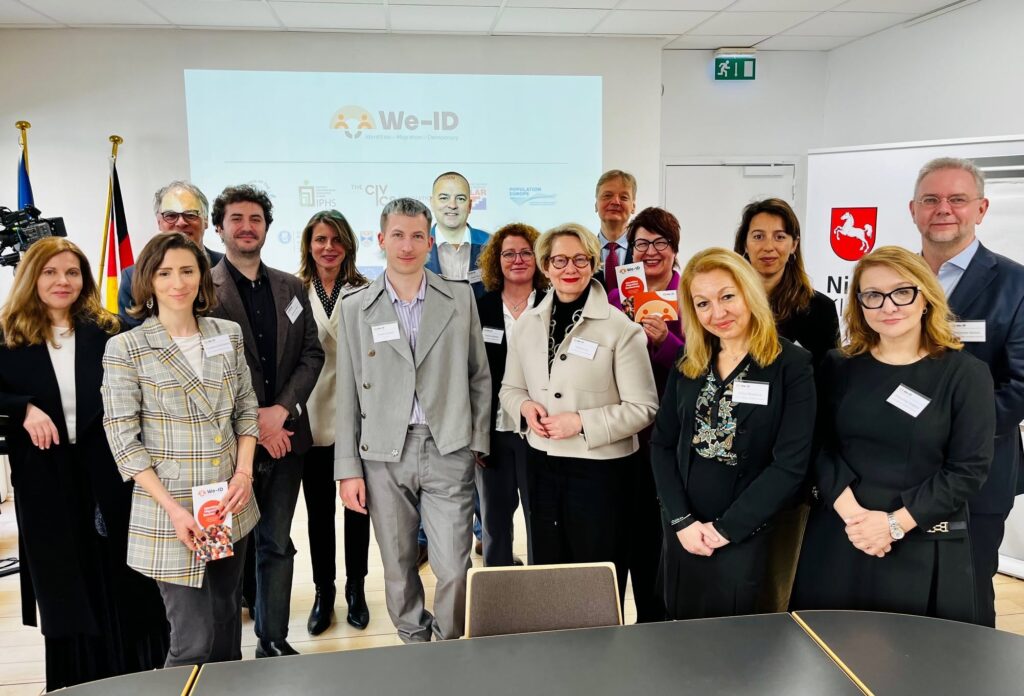
Participants in a We-ID project meeting.
Highlights from the 2025/2026 Project Calendar
Project Kick-off Meeting – Brussels
The IPHS-BAS team took part in the project’s consortium kick-off meeting in Brussels together with representatives of the coordinator, the University of Göttingen, and the consortium partners. Paloma Martin, Katja Reppel and other representatives of EU institutions working in research and innovation joined the meeting. The main focus was on planning the forthcoming activities and coordinating the work packages.
7 October 2025 – Berlin
The public kick-off meeting for Identities – Migration – Democracy (We-ID) was held in the Einstein Hall of the Berlin-Brandenburg Academy of Sciences and Humanities. In the presentation “Local Matters Still: Demographic Change and Urban and Regional Realities”, Assistant Professors Tsvetelina Tsvetanova and Ilina Nacheva presented data on Bulgaria’s current demographic landscape and related trends in migration attitudes over recent decades. The discussion panel attracted strong interest from representatives of civil society, political institutions and the research community.
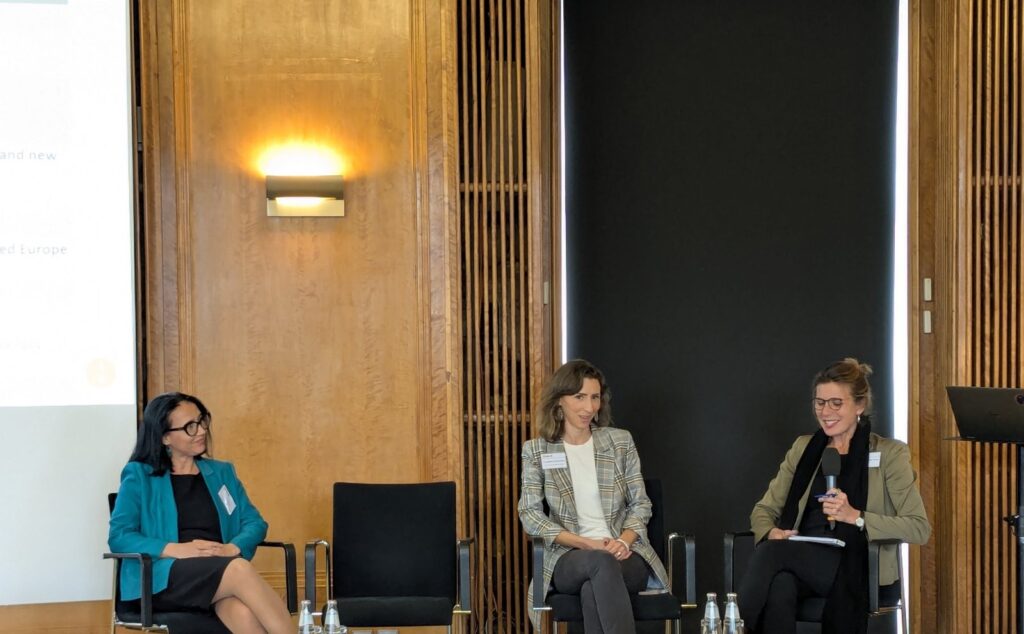
Discussion panel during the public kick-off meeting in Berlin
25 February 2026 – Zagreb
A working meeting of the international project team was held in Zagreb in a hybrid format. The IPHS-BAS participants presented results from interviews conducted to date with migrants from Ukraine and the Middle East, as well as with members of local communities in Bulgaria’s border regions. The main findings were consolidated in the public report “Report on Identities, Belonging, Cohesion and Feeling of Democracy“. Particular interest centred on the challenges encountered during field research.
26 March 2026 – Virtual “Psychological Café” Meeting
The We-ID project was presented to students from the Psychology Club at Paisii Hilendarski University of Plovdiv. During the discussion “Community Cohesion in an Age of Mobility“, Dr Ilina Nacheva spoke with the audience about how the project can contribute to a better understanding of social processes and attitudes towards migrants at both European and local levels.
12 May 2026 – Brussels
A working lunch brought together representatives of EU institutions, the European Parliament, civil society organisations and local authorities to discuss preliminary findings on demographic change, migration, territorial inequalities and democratic resilience. Following welcoming remarks by Professor Claudia Neu, Professor Arnstein Aassve of Bocconi University analysed long-term trends in institutional trust across Europe. The IPHS-BAS team presented findings from a study involving people displaced by the wars in Ukraine and the Middle East, as well as members of host communities in Bulgaria, while Caroline Hornstein Tomić of the Institute of Social Sciences Ivo Pilar shared findings from fieldwork conducted in several countries. The discussion attracted strong interest.
14-15 May 2026 – Varna
At the Creative House of the Bulgarian Academy of Sciences in Varna, the interim findings from the project’s first phase were presented. The event was opened by the project lead, Professor Claudia Neu. On behalf of the Bulgarian team, Professor Antoaneta Hristova and Associate Professor Diana Bakalova presented the methodology and analytical findings and moderated the discussion that followed.
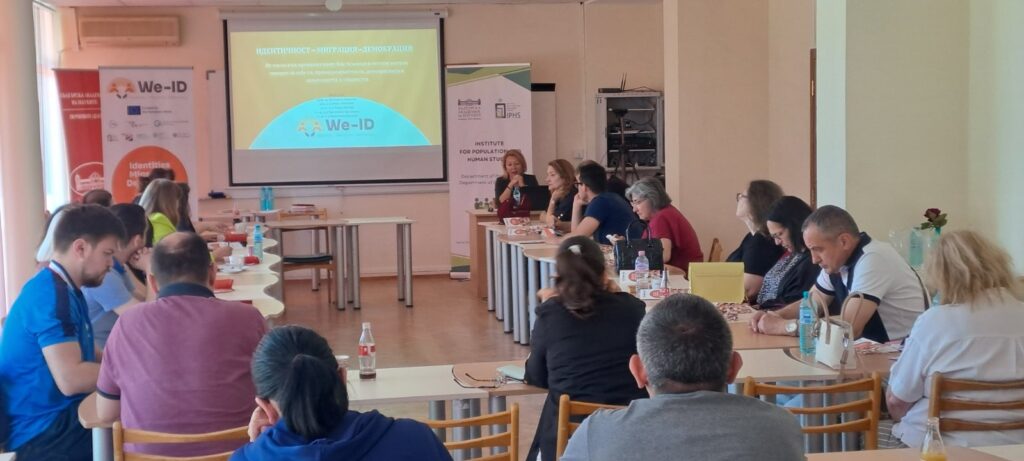
Presentation of the results from the project’s first phase in Varna.
15-17 June 2026 – Stockholm
The international consortium held a We-ID mid-term meeting focused on fieldwork across Europe and emerging research findings. A central question was what democratic resilience means for younger Europeans at a time of demographic and social change. Led by Professor Antoaneta Hristova, the team presented an analysis of threats and risk factors drawing on the working reports “Concept for the New In-Depth Model on Identity, Belonging, Cohesion, and Democracy” and “Risk Analysis of Threats of Identity, Belonging, Cohesion and Democratic Processes”. The findings are available as open-access publications and are based on qualitative research carried out by the IPHS-BAS team within We-ID.
We-ID continues to advance an international research dialogue on how migration, demographic change and social transformation shape identities, belonging, cohesion and democratic processes across Europe.