Head of the project: Asst. Prof. Daniela Angelova, PhD
This is the first comprehensive and in-depth monographic study of marriage and marriage patterns in the Bulgarian lands in the XIX century. The considered problems have not been developed in the Bulgarian historical science so far. The study lays the foundations for building a comprehensive picture of the nature and specificity of the existing marriage models in our lands and their place among those characteristic of the population of Europe.
Numerous and rich source material was used in the study. Most of the documents, mainly those of Ottoman-Turkish origin, as well as some of the protocol books of Bulgarian church communities, are put into scientific circulation for the first time. The research synthesizes the methods used in international studies for the study of marriage and marriage patterns and is adapted to the specifics of the data relating to the Bulgarian lands in the XIX century. The book combines various problems, which have so far been studied separately or only partially. Such are the questions of the legal bases of marriage characteristic of the epoch under study; about the specifics of marriage in the Bulgarian lands in the XIX century; for the divorce rate among the population inhabiting the studied area; for marital problems among the studied society and the measures taken for their solution.
The study of marriage and marriage patterns in the Bulgarian lands in the 19th century helped to clarify the overall picture of Bulgarian society in the last years before the Liberation. This study lays the foundation for a more in-depth and comprehensive elaboration of the issues of marital relations in the following historical epochs.
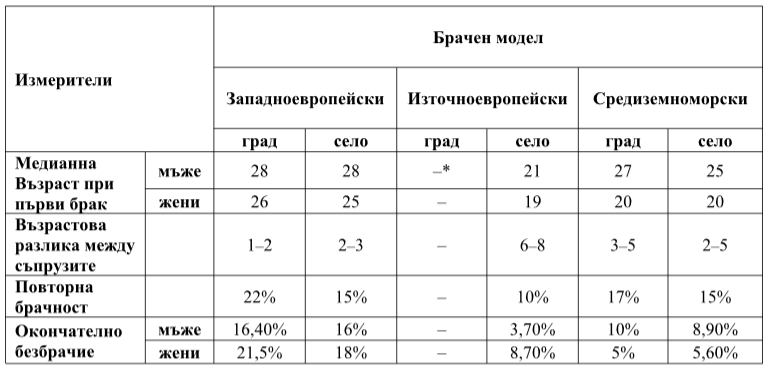
The results of the analysis of the available source material allow us to conclude that in the Bulgarian lands in the 19th century the Mediterranean type of marriage was witnessed. However, some specifics stand out:
- – The crude marriage rate shows values typical of Central and
Eastern Europe with a declining trend. - – The assessment of the median age at first marriage corresponds to
the Mediterranean marriage model. - – The age difference between the partners is significant as the difference
between 5 and 10 years in favor of the husband prevails. - – Low proportion of remarriage. The median age of
subsequent marriages is limited to the working age for the males
and the childbearing age for the females. - – Low proportion of final celibacy, almost non-existent
among women. A high relative share of widows who prefer to
remain unmarried has been registered.